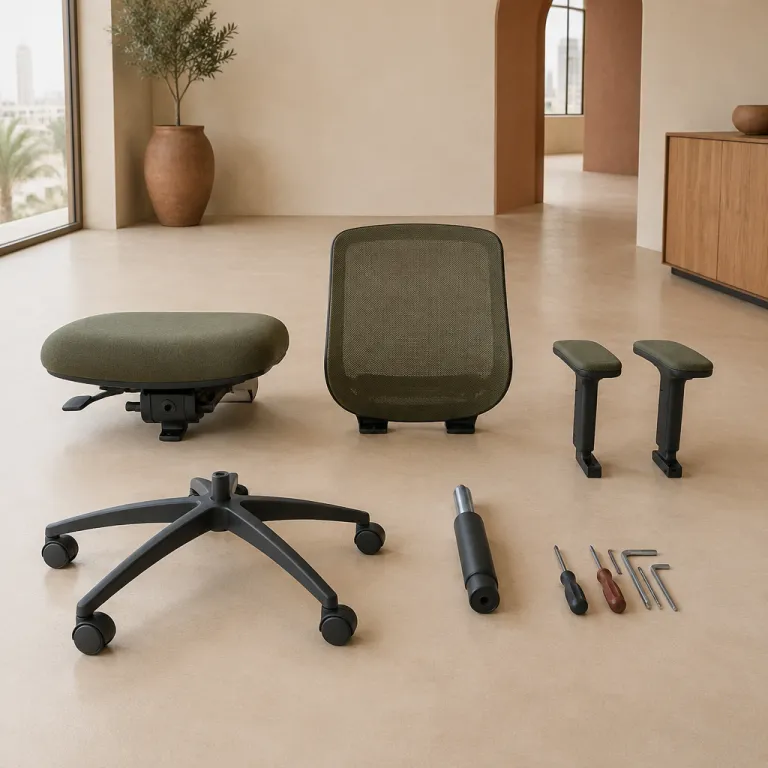
Why office managers in the Arabian Emirate need a clear method to take apart desk chairs
Office managers in the Arabian Emirate often manage hundreds of office chairs across multiple floors. When you understand how to take apart a desk chair safely, you reduce downtime, protect your maintenance team, and extend the life of every chair. In a high end office where each office chair may cost more than a gaming chair, a structured process for taking a chair apart becomes a strategic facilities decision rather than a simple repair task.
Most premium chairs in Dubai or Abu Dhabi, including many Herman Miller office chairs or similar ergonomic models, rely on a gas cylinder mechanism between the seat and the base. If you try to remove that cylinder without a plan, you risk damaging the cylinder base, the casters, or even the backrest, which will quickly turn a simple chair apart operation into a costly replacement. Always consult the manufacturer’s service guide before attempting gas lift removal, and follow any warnings about tools, force, or warranty conditions. Knowing when to use a pipe wrench, when a rubber mallet is enough, and when a screwdriver or Allen key is required helps your team disassemble office seating efficiently while keeping safety and warranty requirements intact.
In many Arabian Emirate companies, the office layout changes several times per year, and chairs must move between hot desk zones, executive suites, and meeting rooms. When you can quickly take apart a base chair, remove casters, and adjust the seat height mechanism, you can make one chair fit multiple roles instead of buying new chairs for every change. This is especially relevant when you manage mixed fleets of office chairs, from Herman Miller Aeron models to budget gaming chair designs, because each chair will require a slightly different disassembly sequence and tool set based on the original manufacturer’s instructions.
Preparing your workspace and tools before taking a chair apart
Before you remove a single screw from any chair, prepare a clean, stable workspace away from busy office corridors. Lay a thick fabric or cardboard sheet on the floor so the base, casters, and cylinder mechanism do not scratch tiles or marble, which is common in Arabian Emirate reception areas. This preparation will also help you keep chair components organized, making it easier to reassemble the office chair later without losing small parts.
For most modern office chairs, you will need a basic but complete tool kit that includes a standard wrench, a pipe wrench for removing cylinder parts where the brand allows it, a rubber mallet, and a combined screwdriver and Allen key set. Many Herman Miller and similar premium chairs use Allen bolts to secure the backrest and armrests to the seat, while some gaming chair models rely on Phillips screws that can strip easily if you rush. Having the right tools ready means you can take apart the desk chair in a controlled sequence, rather than forcing a chair remove step that might damage the mechanism, compromise safety, or void the warranty.
It is also wise to prepare a simple labelling system, especially when you disassemble office chairs in bulk during a refurbishment or visitor management upgrade. Use small bags or labelled trays for each base chair, and note whether the seat height adjustment and cylinder base are functioning correctly before you take the chair apart. When your team later needs to keep chair parts matched to specific desks or zones, these labels will help you maintain a consistent chair fit for staff and visitors, which supports any digital visitor management process you implement through tools described in this guide to visitor management systems for UAE offices.
Step by step process to take apart the base, casters, and cylinder
Start the disassembly by turning the chair on its side so the base and casters are fully visible and easy to reach. Hold the base chair firmly, then pull and twist each caster straight out of the base, using a flat screwdriver for leverage if needed, because this helps you remove casters without cracking the plastic sockets. Once the casters are off, you can inspect them for sand or dust, which is common in Arabian Emirate offices and often the real reason a chair feels rough when it rolls across a desk area.
Next, focus on the gas cylinder that connects the seat to the base, because this is the part that usually resists when you try to take the chair apart. To start removing the cylinder, follow the brand’s official procedure and confirm that the chair is unloaded and stable. Where permitted by the manufacturer, you can grip the cylinder base with a pipe wrench, then gently tap the wrench with a rubber mallet while supporting the base with your other hand. This controlled impact will help the cylinder mechanism break free from the base chair without bending the metal, and it will also reduce the risk that the cylinder will suddenly release and damage nearby office furniture or the desk surface.
After the cylinder is free from the base, you can remove it from the seat plate by repeating the same pipe wrench and rubber mallet technique, always keeping the chair apart from other equipment for safety and wearing eye protection. Many Herman Miller Aeron and similar Aeron style models use a tight press fit between the cylinder and the seat mechanism, so patience is essential when you take apart these premium office chairs. Once the removing cylinder step is complete, label the cylinder, base, and casters for each chair so you can keep chair components matched, which will make it easier to restore the correct seat height and chair fit when you reassemble the office chair fleet.
Detaching the seat, backrest, and armrests without damaging ergonomic mechanisms
With the base and cylinder removed, place the chair upright on the floor so the seat and backrest are stable and easy to access. Most office chairs use a metal mechanism plate under the seat that connects to the cylinder and controls seat height and tilt, and this plate is usually held by four bolts. Use a suitable screwdriver or Allen key from your screwdriver Allen set to remove these bolts carefully, then lift the mechanism away from the seat and place it aside.
Once the mechanism is off, you can focus on the backrest and armrests, which are often the most delicate parts of a Herman Miller or similar ergonomic chair. On many Herman Miller Aeron chairs, the backrest attaches to the seat frame with a combination of screws and clips, so you should take a photo before you start to disassemble the backrest, because this will guide you when you later take the reverse steps to reassemble the chair. For gaming chair designs, the backrest usually bolts directly to the seat with two large side brackets, and you can remove these bolts with a wrench or Allen key while supporting the backrest with your other hand so it does not fall apart suddenly.
Armrests deserve special attention, because staff often adjust them daily to fit different desk heights and tasks in a busy Arabian Emirate office. Some office chairs use a simple top down screw to hold each armrest to the seat, while others integrate the armrests into the mechanism, which means you must remove the mechanism first before you can take the armrests off. When you keep chair parts grouped by seat, backrest, armrests, and mechanism, you make it easier to manage mixed fleets of office chairs and to apply consistent ergonomic policies, such as those described in an AI policy template for UAE offices that helps align facilities decisions with broader corporate rules.
Managing premium brands like Herman Miller in Arabian Emirate corporate environments
Premium brands such as Herman Miller require extra care when you decide how to take apart a desk chair in a corporate tower on Sheikh Zayed Road or in Abu Dhabi Global Market. A Herman Miller Aeron or similar Aeron model uses a sophisticated cylinder mechanism and a complex tilt mechanism that can be damaged if you use the wrong wrench or apply force in the wrong direction. For these chairs, always consult the official service documentation before you remove the base, backrest, or armrests, and train at least one qualified technician in your team to handle these tasks.
When you manage a mixed inventory of office chairs that includes Herman Miller, gaming chair models, and generic task chairs, standardize your process for taking each chair apart but keep brand specific notes. For example, you might specify that only a pipe wrench with protective padding may touch the cylinder base on Herman Miller chairs, while a standard wrench is acceptable for other chairs, and that a rubber mallet is mandatory for removing cylinder parts to avoid shock damage where the manufacturer allows impact tools. This level of detail will help you keep chair warranties valid, reduce replacement costs, and maintain a consistent seat height and chair fit across all desks in your office.
In executive suites, where a single office chair may be paired with a high value desk and bespoke cabinetry, you should schedule preventive maintenance that includes partial disassemble office procedures. During these sessions, your team can remove casters to clean them, check the cylinder for slow leaks, and tighten the mechanism bolts under the seat before any problem becomes visible to senior leaders. For guidance on selecting and maintaining high comfort executive seating, many Arabian Emirate facility managers refer to resources such as this analysis of an extreme comfort chair for executive offices, which highlights how proper care and periodic chair apart procedures protect long term ROI.
Operational policies, safety, and sustainability when taking chairs apart in Arabian Emirate offices
Every Arabian Emirate company that manages a large office should formalize a policy for how and when to take apart a desk chair. This policy should define who is authorized to remove a cylinder, who may disassemble a base chair, and how to document each chair apart operation in your facilities management system. Clear rules will protect your team from injury, reduce liability, and ensure that office chairs are always safe for staff and visitors.
Safety starts with training, because many accidents occur when someone tries to remove casters or a cylinder without understanding the internal pressure or the way the mechanism locks. Require your maintenance staff to wear gloves and eye protection when removing cylinder parts, and insist that they always use the correct pipe wrench, rubber mallet, and screwdriver Allen tools for each task. When you standardize these procedures and align them with manufacturer safety bulletins, you will keep chair related incidents low, maintain consistent seat height settings across desks, and avoid sudden failures that could damage both the chair and nearby office equipment.
Sustainability is another critical dimension, especially as Arabian Emirate companies align with national ESG strategies and green building certifications. Instead of discarding an office chair when the cylinder fails or the casters wear out, train your team to take the chair apart, replace only the faulty cylinder mechanism or casters, and then reassemble the chair for continued use. By extending the life of each chair, whether it is a Herman Miller Aeron, a generic task chair, or a gaming chair used in a creative studio, you reduce waste, control costs, and support long term environmental objectives for your organization.
Practical checklists for reassembly, storage, and fleet optimization
Once you have taken a chair apart, reassembly should follow a clear checklist so no mechanism or safety feature is overlooked. Start by reconnecting the cylinder to the seat mechanism, then press the cylinder base into the base chair firmly until the fit is secure, and finally reinstall the casters by pushing them straight into their sockets. After this, sit on the office chair and test the seat height, tilt, and backrest tension to confirm that everything works as expected.
For chairs that you plan to store rather than return immediately to a desk, keep chair components grouped in labelled boxes that indicate the brand, model, and any special notes about the cylinder or mechanism. For example, you might label a box “Herman Miller Aeron, cylinder replaced, armrests upgraded” so your team knows that this chair will fit best in a specific office zone or for a particular executive. This level of detail helps you optimize your fleet of office chairs, ensuring that each chair apart and reassembly cycle contributes to better ergonomics and more efficient use of storage space.
When you plan a large scale refurbishment or relocation, use your records of which chairs have been taken apart, which cylinders have been replaced, and which bases or casters have been upgraded. This data will help you decide whether to redeploy a Herman Miller chair to a high priority desk, move a gaming chair to a creative hub, or retire a worn chair that no longer provides safe support even after multiple disassemble office operations. Over time, a disciplined approach to taking chairs apart, tracking each cylinder mechanism, and managing reassembly will give you a measurable improvement in staff comfort, maintenance costs, and overall office performance.
Key figures and statistics about office chairs and maintenance
- According to the Occupational Safety and Health Administration in the United States, musculoskeletal disorders account for roughly 30% of all workplace injury and illness cases, and poorly adjusted office chairs are a significant contributing factor, which underlines why correct seat height and backrest support matter when reassembling chairs.
- Research from the Chartered Institute of Ergonomics and Human Factors indicates that well designed ergonomic chairs, such as premium Herman Miller models, can reduce self reported back pain by up to one third after several weeks of consistent use, which justifies careful maintenance and proper handling of the cylinder mechanism and armrests.
- Facilities management surveys in large corporate offices show that extending the life of an office chair from 7 to 12 years through component level repairs, such as replacing casters or a gas cylinder instead of the entire chair, can reduce seating related capital expenditure by more than 25% over a decade.
- Data from commercial furniture recyclers in the Gulf region suggests that reusing and refurbishing office chairs instead of sending them to landfill can cut furniture related waste volumes by up to 50%, supporting corporate ESG objectives and national sustainability initiatives.
FAQ about taking apart office chairs in Arabian Emirate workplaces
How often should I take apart a desk chair for maintenance ?
For most office environments in the Arabian Emirate, a full chair apart inspection every 18 to 24 months is sufficient, unless the chair is heavily used in a 24/7 operation. High traffic chairs in reception areas or trading floors may need more frequent checks of the casters, cylinder, and mechanism. Always schedule an immediate disassembly and inspection if staff report sudden changes in seat height stability, tilt function, or backrest support.
Which tools are essential for safely taking a chair apart ?
The core tools for disassembling most office chairs are a standard wrench, a pipe wrench for gripping the cylinder base, a rubber mallet for controlled impacts, and a combined screwdriver and Allen key set for bolts on the seat, backrest, and armrests. These tools allow you to remove casters, separate the base from the cylinder, and detach the mechanism without damaging components. For premium brands like Herman Miller, always check the manufacturer’s service guide for any brand specific tool recommendations.
Is it safe for my in house team to remove a gas cylinder ?
It is safe for trained staff to remove a gas cylinder as long as they follow a documented procedure and use the correct tools, especially a pipe wrench and rubber mallet, while wearing appropriate protective equipment. The key risk is applying uncontrolled force that could cause the cylinder to release suddenly or damage the base chair. If your team lacks experience with removing cylinder components on premium chairs, consider outsourcing the first few operations to an authorized service provider and using that as a training opportunity.
Can I reuse parts from one chair to repair another chair ?
Reusing compatible parts, such as casters or a cylinder with the same diameter and stroke, is a practical way to extend the life of your office chair fleet and reduce waste. However, you must confirm that the replacement part matches the original specifications for load rating and fit, especially for Herman Miller or other certified ergonomic chairs. Always document which parts have been swapped so you can track performance and warranty implications over time.
When should I replace a chair instead of repairing it ?
You should consider replacing a chair when the frame is cracked, the backrest structure is deformed, or repeated repairs to the cylinder mechanism and casters no longer restore stable performance. If the cost of parts and labour to take apart and rebuild the chair approaches 50% of the price of a new, ergonomically superior office chair, replacement usually offers better long term value. In executive or client facing areas, aesthetic wear such as torn upholstery may also justify replacement even if the mechanism still functions correctly.
References
- Occupational Safety and Health Administration (OSHA) – Ergonomics and musculoskeletal disorders guidance.
- Chartered Institute of Ergonomics and Human Factors – Research on seating and workplace ergonomics.
- British Standards Institution (BSI) – BS EN 1335 and BS EN 5459 standards for office work chairs.