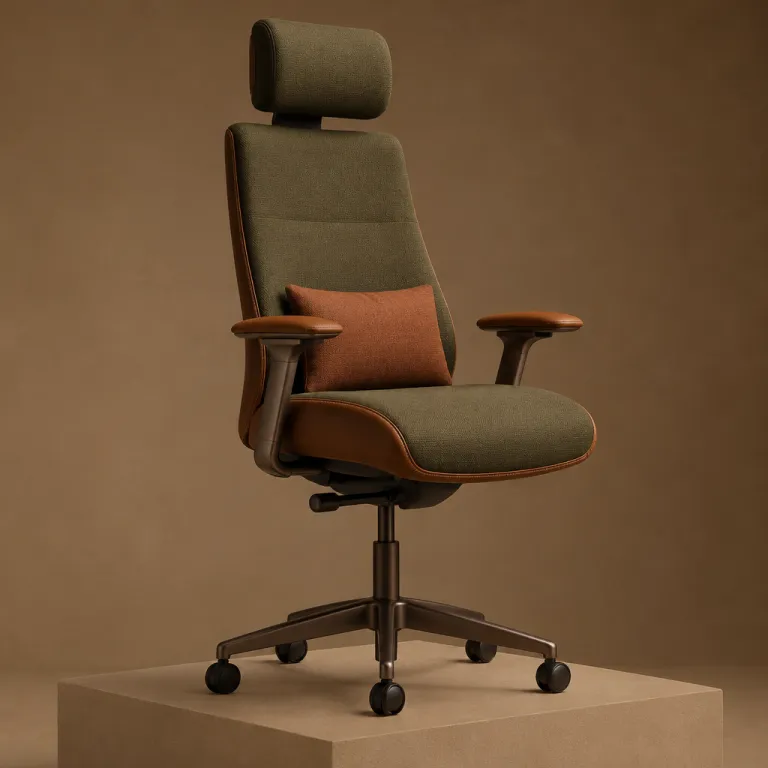
Why chairs for tall people matter in Arabian Emirate offices
Office managers in the Arabian Emirate region oversee équipes working long hours at a desk. For tall people, a standard office chair often creates pressure points, weak lumbar support and poor circulation in the legs. Over time, these issues with chairs for tall people translate into musculoskeletal complaints, lower productivity and higher absence rates.
In many open plan office spaces in Dubai or Abu Dhabi, tall users sit on big tall frames squeezed into compact seats that were designed around a 1,75 m person. When a chair is too short in seat depth or too low in seat height, tall ergonomic alignment becomes impossible and the spine compensates with unhealthy curvature. That is why an ergonomic office strategy must treat the tall office population as a specific risk group with clear requirements and measurable résultats.
Facilities teams often focus on stylish products and ignore the certified ergonomic chair options that better fit tall users. Yet a single height adjustable office chair with robust lumbar support can prevent repeated complaints and reduce the durée of back pain episodes. For office managers, aligning chair ergonomic choices with health and safety données is not a luxury; it is a core part of quality of life at work.
Key ergonomic requirements for a tall office workforce
For chairs for tall people, the first requirement is a higher seat height range that matches long legs. A tall office worker typically needs an ergonomic chair with a seat height that can rise several centimetres above the standard 42–50 cm range. Without this height adjustable feature, tall users either perch on the edge of the seat or let their knees sit higher than their hips, both of which overload the lumbar area.
Seat depth is the second critical dimension when selecting an office chair for big tall employees in Arabian Emirate companies. A deeper seat allows the thighs of tall people to be fully supported while still leaving a two to three finger gap behind the knees to protect circulation. When the seat depth is too short, weight shifts to a small area of the seat and the weight capacity of the chair is effectively reduced to a narrow pressure zone, increasing discomfort and fatigue.
Modern ergonomic office products also need adjustable lumbar features that match the curvature of a tall spine. An adjustable lumbar pad or height adjustable backrest lets each tall ergonomic profile align the lumbar support exactly where it is needed. To go further in workstation optimisation, pair these office chairs with adjustable keyboard and mouse stands so that chair tall settings, armrests and desk height all work together as one coherent ergonomic product ecosystem.
Choosing materials and mechanisms that suit big tall users
In the Arabian Emirate climate, breathable materials are essential for chairs for tall people who sit for long stretches. A mesh back office chair allows air circulation around the back and lumbar region, which is especially valuable when the office air conditioning struggles against high outdoor temperatures. For the seat itself, a dense foam or hybrid mesh seat can distribute pressure more evenly for big tall users whose weight capacity needs exceed the assumptions of many standard designs.
Mechanisms matter as much as materials when specifying ergonomic chair products for tall users. A synchronous tilt with tension adjustment lets tall people recline while keeping the seat relatively level, which protects circulation behind the knees and maintains lumbar support contact. When this mechanism is combined with an adjustable lumbar feature and a height adjustable headrest, the chair becomes a true tall ergonomic solution rather than a slightly enlarged standard model.
Office managers should also evaluate whether a recline function with a locking position can complement more relaxed work modes. For example, pairing a robust big tall office chair with a recliner chair on wheels in focus rooms can give tall people alternative postures during demanding projects. The goal is to build a family of office chairs and lounge products where every chair top option respects weight capacity in lbs or kilograms, supports the lumbar curve and offers enough seat depth for tall users.
Weight capacity, certification and safety in Arabian Emirate workplaces
For chairs for tall people, weight capacity is not a theoretical specification; it is a daily safety parameter. Many standard office chairs are certified for around 110 kg, yet big tall professionals in finance, energy or aviation sectors may exceed this limit. When a chair tall design is used beyond its rated lbs capacity, components wear faster, mechanisms fail earlier and the risk of sudden breakage increases.
Office managers in the Arabian Emirate region should prioritise certified ergonomic office products that clearly state both maximum weight capacity and recommended user height. International standards such as BIFMA X5.1 for general-purpose office chairs and EN 1335 for office work chairs provide structured tests for stability, durability and safety, but for tall users it is wise to look for big tall or tall ergonomic variants that go beyond minimum norms. These models often feature reinforced bases, upgraded gas lifts and wider seat dimensions that better support tall people under real working conditions.
Procurement teams can integrate these requirements into their appels d’offres and supplier scorecards to secure better résultats over the durée of the contract. Ask vendors to specify which ergonomic chair product lines are designed for tall office populations and to provide test reports for lbs ratings and cyclic loading. By doing so, you learn exactly how each chair ergonomic model will behave under the daily activity of tall users, rather than relying on generic marketing claims about support and comfort.
Strategic purchasing and lifecycle management of tall ergonomic seating
Investing in chairs for tall people should be treated as a strategic decision, not a one off purchase. A structured approach starts with mapping how many tall users you have in each office and which roles require the longest seated durée. With these données, you can define clear requirements for seat height, seat depth, lumbar support and weight capacity before engaging with suppliers.
When comparing products, evaluate the total cost of ownership rather than just the initial price of each office chair. A certified tall ergonomic model with a strong mechanism and mesh back may cost more upfront but often delivers better ROI through fewer repairs, less downtime and higher employee rétention. Lifecycle thinking also means planning for spare parts, upholstery refresh options and the ability to reconfigure office chairs as teams grow or move between Arabian Emirate locations.
For companies that also purchase used or refurbished chairs tall models, governance becomes even more important. Office managers can refer to guidance on strategic choices for used office chairs to balance sustainability with safety for tall people. The objective is to maintain a coherent portfolio of chair products where every chair top option, whether new or reused, still meets ergonomic chair standards for tall users in terms of support, lbs rating and adjustability.
Improving quality of life at work for tall employees in Arabian Emirate companies
Quality of life at work in Arabian Emirate offices depends heavily on how well the physical environment respects human diversity. Chairs for tall people are a visible signal that management recognises the specific needs of tall users and big tall body types. When an office chair finally offers proper lumbar support, adequate seat depth and a generous seat height range, tall people often report immediate relief and renewed engagement.
Office managers can integrate tall ergonomic seating into broader well being stratégies that also cover lighting, acoustics and flexible work policies. For example, pairing ergonomic office chairs with sit stand desks allows tall users to alternate between seated and standing postures, which reduces static load on the spine and hips. Training sessions where employees learn how to adjust height adjustable features, set adjustable lumbar pads and fine tune tilt tension can significantly improve the real world impact of every ergonomic chair product deployed.
Feedback loops are essential to maintain high résultats over time and to adapt to evolving activity patterns. Regular surveys can track how tall office workers rate their office chairs in terms of comfort, support and perceived safety at different lbs ranges. By analysing these données, facilities équipes can refine procurement requirements, identify which chair ergonomic models perform as chair top options and continuously upgrade the quality of life at work for tall people across Arabian Emirate sites.
Key statistics on tall users and ergonomic seating
- Research from the European Agency for Safety and Health at Work reports that up to 60% of office workers experience lower back pain at some point in their career, with poorly adjusted office chairs cited as a major factor (see “Work-related musculoskeletal disorders: prevalence, costs and demographics in the EU”).
- Anthropometric surveys show that the 95th percentile male height in many Gulf countries exceeds 180 cm, which means a significant share of tall people will find standard seat height ranges insufficient without height adjustable chairs; regional data compiled by public health authorities in the UAE and neighbouring states confirm this trend.
- Studies published by the Journal of Occupational Rehabilitation indicate that well designed ergonomic chair interventions can reduce musculoskeletal discomfort scores by 20–30% within a few months of implementation, for example in trials where employees received training plus upgraded seating.
- Data from BIFMA certification programmes highlight that big tall office chair models are often tested to weight capacity ratings of 150–200 kg under standards such as BIFMA X5.11, compared with around 110 kg for many standard products evaluated under BIFMA X5.1.
- Workplace ergonomics programmes that combine training with upgraded office chairs have been associated with productivity gains of 5–10%, according to case studies from multinational corporations operating in the Middle East that track output before and after ergonomic interventions.
FAQ – chairs for tall people in Arabian Emirate offices
What seat height range should I specify for tall office workers ?
For most tall people above roughly 180 cm, an ergonomic chair should offer a seat height that can adjust from about 45 cm up to at least 55 cm from the floor. This height adjustable range allows tall users to keep their feet flat while maintaining knees slightly below hip level. Always test the office chair with real employees to confirm that the seat height and seat depth work together for proper lumbar support.
How do I check whether a chair is suitable for big tall employees ?
Start by confirming the certified weight capacity in both lbs and kilograms, then compare it with the expected user population. Next, review dimensions such as seat width, seat depth and backrest height to ensure they exceed standard office chairs by a meaningful margin. Finally, verify that the product includes adjustable lumbar features and a robust mechanism designed for intensive daily activity.
Are mesh office chairs a good option for tall users in the Arabian Emirate climate ?
Mesh back office chairs are often well suited to the hot Arabian Emirate environment because they improve airflow around the back and lumbar region. For tall people, a mesh design combined with a deep, supportive seat and adjustable lumbar pad can provide both comfort and stability. The key is to choose a chair ergonomic model where the mesh tension, frame strength and weight capacity are all appropriate for big tall users.
How many chairs for tall people should an office manager budget for ?
A practical approach is to analyse height données from medical checks or anonymous surveys to estimate the share of tall users in each office. Many companies in the region find that 10–20% of staff benefit from dedicated tall ergonomic seating, though some sectors with more male employees may require a higher proportion. It is wise to keep a small buffer of extra office chairs for tall people so that new hires can be accommodated immediately.
What training should accompany the deployment of tall ergonomic chairs ?
Every tall office worker should receive a short one to one session on how to adjust seat height, seat depth, armrests and lumbar support. Demonstrating how to use adjustable lumbar features, tilt tension and height adjustable components helps tall users reach a stable, comfortable posture. Office managers can then share simple checklists so that people remember how to fine tune their ergonomic chair whenever their activity or workstation changes.