Why office managers in the Emirates need a clear chair disassembly strategy
In a fast growing Arabian Emirate company, knowing how to take apart an office chair safely is no longer a minor maintenance detail. When you manage dozens of office chairs across multiple floors, every disassembly step affects downtime, staff comfort, and the overall ergonomic office environment. A structured approach to taking a chair apart also helps you control storage, recycling, and procurement costs in a region where premium ergonomic chair models are common.
Many office managers underestimate how much time technicians spend to disassemble office furniture, especially when each office chair has a different cylinder mechanism, base design, and armrest configuration. Without standardised instructions for how to take apart an office chair, your équipe risks damaging expensive parts such as the gas lift, lumbar support pads, or support armrests, which directly reduces ROI on your furniture budget. Clear internal procedures for chair disassembly will also help you align with local health and safety expectations in Dubai, Abu Dhabi, and other Emirates, where facility inspections increasingly check ergonomic support and safe handling of pressurised gas components.
In open plan offices and hybrid layouts, you probably rotate chairs between departments to keep chair fit consistent with each role. That means you or your facilities équipe will regularly remove casters, adjust seat height, and sometimes fully disassemble office chairs before moving them between towers or storing them during refurbishments. Treating every office chair as a managed asset, with documented disassembly instructions, labelled parts, and basic safety notes, turns a messy maintenance task into a predictable workflow that supports both finance and HR objectives.
Tools, safety checks, and preparation before you take a chair apart
Before you take apart any office chair, start with a quick safety check of the gas components and the overall support structure. Place the chair on a stable surface, lock the casters if possible, and verify that the gas lift cylinder is not leaking oil or chair gas, because a damaged cylinder can behave unpredictably during disassembly. In Arabian Emirate company environments where maintenance teams work under time pressure, skipping this initial check often leads to rushed chair disassembly and avoidable injuries.
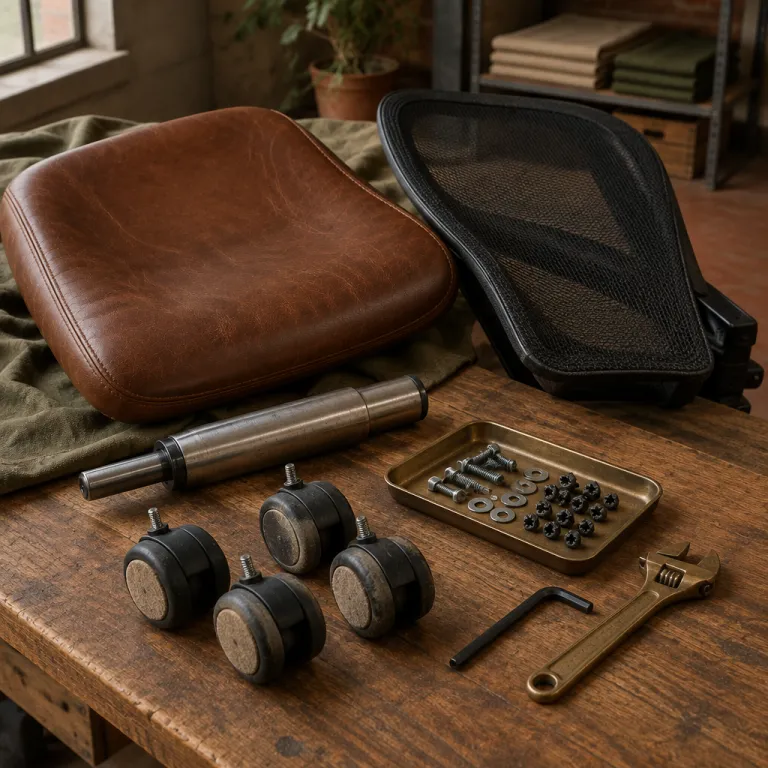
Your basic toolkit for disassembling office chairs should always include a pipe wrench, a rubber mallet, a set of screwdrivers, and protective gloves, because these tools allow you to remove the cylinder and base without scratching visible parts. Add safety glasses and closed shoes as mandatory personal protective equipment (PPE) whenever you work near a pressurised gas lift. The pipe wrench gives you controlled grip on the cylinder mechanism when you disassemble office seating that has been in use for several years, while the rubber mallet lets you gently tap the base away from the gas lift without damaging the ergonomic chair frame. For larger Arabian Emirate company sites, standardising this toolkit across maintenance teams and documenting it in your internal help desk playbook, ideally linked from your IT and facilities support tiers such as in an internal help desk playbook, will reduce training time for new technicians.
Labelled storage boxes for small parts such as casters, armrest screws, and lumbar support brackets will save you hours when you later reassemble the chair into a working unit. Encourage your équipe to photograph each office chair before and during disassembly, especially when the ergonomic office design includes complex support armrests or multi segment seat pads. These photos, combined with written step by step instructions on how to take apart an office chair, create a reusable knowledge base that supports consistent results across all your offices. Where possible, add simple callouts such as “Photo 1: underside of base showing cylinder socket” or “Photo 2: armrest bracket orientation” so that even new staff can match what they see on site with your documentation.
Step by step: removing casters, base, and gas lift cylinder
The first practical step in how to take apart an office chair is usually to remove casters from the base, because this stabilises the frame and prevents the chair from rolling while you work. Grip each caster firmly, pull straight out from the base, and if it resists, use a gentle tap with a rubber mallet rather than twisting, which can damage the socket parts. In many Arabian Emirate company offices, sand and dust can accumulate around casters, so you should also check each wheel for debris before placing it into your labelled storage box.
Once the casters are off, turn the chair upside down and focus on separating the base from the gas lift cylinder, which is often the most challenging part of chair disassembly. Hold the base securely, apply the pipe wrench to the exposed cylinder mechanism, and use controlled force while tapping the underside of the base with the rubber mallet until the base releases from the gas lift. If the base is stuck, apply a small amount of penetrating oil around the joint, wait a few minutes, and then repeat the tapping motion rather than increasing brute force. For office managers overseeing hybrid layouts and hot desk policies, as described in many hybrid office floor plan guides such as this analysis of hybrid office floor plan and hot desk policies, mastering this step lets you quickly separate bases and cylinders for compact storage during reconfigurations.
After the base is removed, you can lift the remaining cylinder out of the seat mechanism, or in some models, you will need to disassemble office chair components around the cylinder first. Always check whether the manufacturer specifies a particular direction for removing the cylinder, because forcing the chair gas cartridge the wrong way can deform the seat support. In your maintenance log, record which office chairs required extra force or special instructions, so your équipe can anticipate similar resistance when taking another chair apart from the same batch. For any cylinder that shows dents, corrosion, or active leakage, isolate it immediately in a clearly marked container and follow your building’s hazardous waste procedure instead of attempting to depressurise it yourself.
Handling the seat, armrests, and lumbar support without damaging ergonomic features
With the base and cylinder removed, the next focus in how to take apart an office chair is the upper structure, especially the seat, backrest, and armrests. Lay the chair on its side, check how the seat is fixed to the mechanism, and follow the manufacturer instructions to remove screws in a cross pattern so that pressure on the ergonomic frame stays balanced. This careful approach matters in Arabian Emirate company settings where many office chairs are high end ergonomic chair models with sensitive lumbar support systems.
When you disassemble office seating that includes adjustable support armrests, always note the original seat height and armrest positions before you remove them, because this information helps you restore the correct chair fit for the next user. Unscrew each armrest slowly, keep washers and bolts grouped together, and avoid using a rubber mallet on plastic armrest shells, which can crack under impact. For chairs with integrated lumbar support pads, slide or unclip the mechanism gently, since aggressive pulling can break internal parts that are expensive to replace in the Emirates. A simple sketch or quick photo labelled “Backrest bracket – left side” can prevent confusion when you reassemble multiple chairs at once.
Some ergonomic office designs combine the backrest and seat into a single shell, which changes how you take the chair apart and where you apply force during disassembly. In these cases, you will often lift the entire seat and backrest assembly away from the cylinder mechanism as one unit, then separate the components on a workbench where you can better check each support bracket. Documenting these variations across your inventory of office chairs helps your facilities équipe plan realistic time slots for disassembling office furniture during overnight fit out works.
Operational challenges in Arabian Emirate offices: from chair fit to gas cylinder disposal
For an office manager in the Emirates, how to take apart an office chair is tightly linked to broader operational challenges such as sustainability, storage, and staff wellbeing. Every time you remove casters, detach a base, or separate a gas lift cylinder, you are making decisions about whether to repair, reuse, or recycle each component. In high density towers where storage space is limited, efficient chair disassembly allows you to stack seats, bases, and armrests separately, which significantly reduces the footprint of spare chairs.
Gas lift cylinders and chair gas cartridges require particular attention, because local regulations and building management policies may restrict how you dispose of pressurised parts. As a rule of thumb, do not drill, cut, or heat a cylinder to release pressure; instead, store used units upright in a ventilated area, label them as “used gas lifts”, and keep them away from ignition sources until collection. Work with certified waste management providers in Dubai or Abu Dhabi to set up a process where used cylinders are collected, depressurised, and recycled, rather than thrown into general waste after disassembly. This approach not only reduces environmental impact but also demonstrates to your équipe that the company treats office chairs as long term assets, not disposable items.
Ergonomic office strategy in the Emirates often focuses on buying premium chairs, yet the operational reality is that poor maintenance and rushed chair disassembly can quickly erode that investment. By training your maintenance staff on consistent step by step instructions for how to take apart an office chair, you will extend the life of each seat, preserve lumbar support systems, and maintain correct seat height adjustments for employees returning to hybrid desks. For a deeper look at how such operational details influence productivity and hidden costs, many facility leaders review analyses of meeting culture and productivity audits, such as this perspective on meeting culture as an invisible cost center, then apply similar thinking to furniture management.
Building internal procedures and training for consistent chair disassembly
Once you understand how to take apart an office chair technically, the next challenge is embedding that knowledge into repeatable procedures for your Arabian Emirate company. Start by creating a standard operating procedure that lists each step, from the initial safety check of the gas lift cylinder to the final storage of parts, and adapt it for the main chair models in your inventory. Include clear photos of the base, casters, cylinder mechanism, seat, and armrests, so that new technicians can quickly identify which parts they will remove during disassembly. Simple diagram labels such as “Figure 1 – gas lift and base junction” or “Figure 2 – seat plate fixing points” make the process easier to follow.
Run short training sessions where your facilities équipe practices chair disassembly under supervision, focusing on safe use of the pipe wrench and rubber mallet when separating the base from the gas lift. Encourage them to verbalise each step, such as when they remove casters, lift the seat away from the mechanism, or check the lumbar support for damage, because this habit reinforces procedural memory. In multi site Arabian Emirate company operations, record these sessions and store them in your internal knowledge base, so that remote offices can align with the same ergonomic chair handling standards.
Finally, integrate chair disassembly tasks into your preventive maintenance schedule, rather than waiting until an office chair fails completely or an employee complains about poor support. Regularly taking a chair apart for inspection lets you adjust seat height mechanisms, tighten support armrests, and replace worn casters before they cause discomfort or accidents. Over time, this disciplined approach to disassembling office furniture will help you maintain consistent chair fit across all offices, reduce unplanned downtime, and demonstrate to leadership that facilities management directly supports productivity and staff retention.
Key statistics on office chairs, ergonomics, and maintenance
- According to the International Labour Organization, musculoskeletal disorders account for more than 30 % of all work related injuries globally, which highlights why maintaining ergonomic office chairs and preserving lumbar support during disassembly is critical for employee health. See, for example, ILO publications on work-related musculoskeletal disorders in office environments.
- Research from the Occupational Safety and Health Administration indicates that well designed ergonomic interventions, including properly adjusted seat height and support armrests, can reduce worker discomfort by up to 60 %, which justifies the time spent on careful chair disassembly and reassembly. OSHA’s computer workstation eTool and ergonomics guidance provide practical checklists that you can adapt for your own chair maintenance procedures.
- A facilities management survey by the British Institute of Facilities Management reported that structured preventive maintenance programmes can extend office furniture life cycles by 20 to 30 %, meaning that systematic procedures for how to take apart an office chair can significantly lower replacement costs.
- Data from the Chartered Institute of Procurement & Supply shows that bulk purchasing and standardisation of office chairs across large organisations can reduce per unit costs by up to 15 %, which becomes fully effective only when maintenance teams can efficiently take apart and repair those standardised models.
FAQ: practical questions office managers ask about taking apart office chairs
How often should I schedule chair disassembly and inspection in a busy office ?
In a high usage Arabian Emirate company office, plan to take apart and inspect each office chair at least once every 12 to 18 months, checking the gas lift cylinder, casters, seat height mechanism, and lumbar support for wear. Chairs in hot desk zones or call centres may need more frequent disassembly because they experience higher daily load and more aggressive adjustments.
Is it safe for my équipe to remove gas lift cylinders without specialist support ?
It is generally safe for trained maintenance staff to remove gas lift cylinders using a pipe wrench and rubber mallet, provided they follow clear safety instructions and check for visible damage before starting. For any cylinder that shows leaks, corrosion, or deformation, you should stop the disassembly, move the chair to a cordoned off area, and use a certified service provider or licensed waste contractor to avoid handling a potentially unstable pressurised component.
Which parts of an ergonomic chair are most likely to be damaged during disassembly ?
The most vulnerable parts during chair disassembly are plastic casters, armrest shells, and delicate lumbar support mechanisms, especially when excessive force or incorrect tools are used. Training your équipe to apply controlled force only to structural elements such as the metal base and cylinder mechanism will significantly reduce accidental damage.
Can I standardise different chair models to simplify maintenance in my offices ?
You can partially standardise by selecting a limited range of office chairs from one or two manufacturers, which makes the steps for how to take apart an office chair more consistent across your portfolio. While you may still manage different seat and armrest designs, having similar bases, casters, and gas lift cylinders simplifies both disassembly and spare parts management.
What is the best way to store chairs that have been taken apart during a fit out ?
After you take a chair apart, store the base, seat, backrest, and armrests vertically on shelving, and keep small parts such as casters, screws, and cylinder covers in labelled containers attached to each unit. This method preserves the chair fit configuration, prevents loss of parts, and allows your équipe to reassemble office chairs quickly when the new layout is ready.
References
- International Labour Organization – reports on work related musculoskeletal disorders and ergonomics, including guidance on safe workstation and seating design.
- Occupational Safety and Health Administration – computer workstation eTool and ergonomics guidelines, which outline best practices for chair adjustment and maintenance.
- British Institute of Facilities Management – research on preventive maintenance and asset life cycle management for office furniture and building services.
