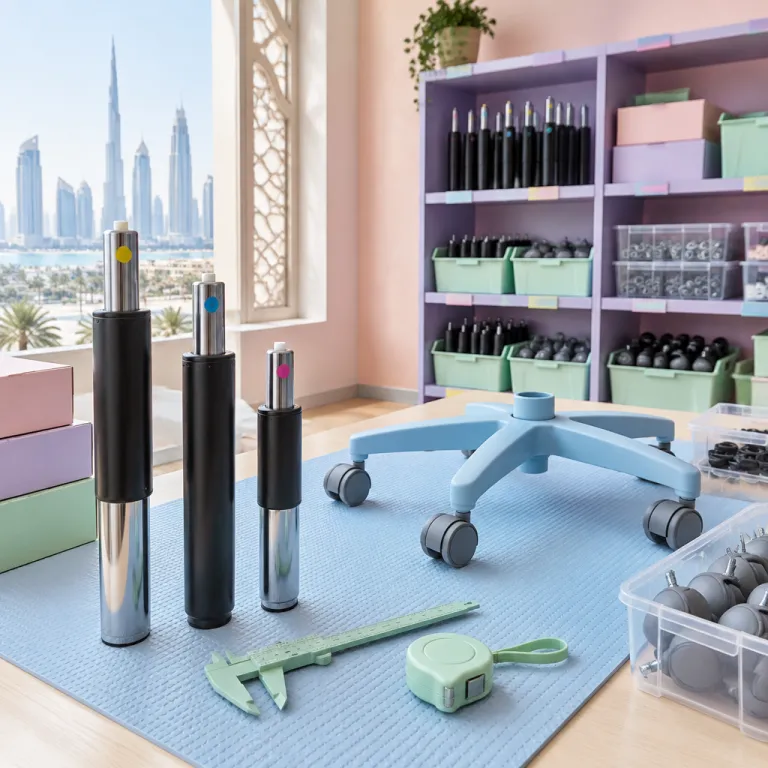
Why office chair cylinders fail faster in Arabian Emirate offices
Office managers in the Arabian Emirate region often see office chair cylinders fail earlier than expected. High ambient temperatures, intensive daily use, and frequent height adjustment cycles put unusual stress on every gas lift cylinder in a modern office. When the office chair replacement cylinder is treated as a disposable consumable instead of a strategic ergonomic component, budgets suffer and staff comfort declines.
In many open plan office spaces, each chair is used by several employees across shifts, which multiplies the number of lift operations and accelerates wear on the internal pneumatic piston and gas spring. The standard gas cylinder inside most office chairs is designed for temperate climates, so the combination of heat, dust, and heavy duty usage in Arabian Emirate companies can degrade seals and internal pressure more quickly. As a result, seat height starts to drift, the chair gas mechanism feels spongy, and the cylinder replacement cycle becomes shorter than the finance team anticipated.
For an office manager, this is not just a comfort issue but a risk to productivity and health, because unstable seat height encourages poor posture and more frequent micro breaks. When a chair cylinder fails in a client facing office, it also undermines the professional image that Arabian Emirate companies work hard to project. Treating the office chair replacement cylinder as a critical facility asset, rather than a minor spare part, helps align procurement, ergonomics, and long term maintenance planning.
Ergonomics, compliance, and visitor experience in shared office spaces
Shared workstations, hot desking policies, and visitor areas in Arabian Emirate offices create specific demands on every office chair and its gas lift cylinder. Staff and guests adjust seat height repeatedly during the day, so the internal gas cylinders must maintain smooth movement and reliable locking at different heights. When the office chair replacement cylinder is underspecified, the constant use in reception zones, meeting rooms, and visitor management desks quickly exposes weaknesses.
In regulated sectors such as financial services or government related entities, facilities teams already manage digital visitor management systems to track access and compliance, often replacing paper logbooks with structured tools similar to those described in compliance ready visitor management frameworks for UAE offices. The same compliance mindset should extend to office seating, because a failing lift cylinder or misaligned seat height can conflict with occupational health guidelines and internal risk registers. A properly specified chair cylinder with verified class rating, tested gas lift performance, and documented cylinder fit for the chosen chairs supports both ergonomics and audit readiness.
Visitor areas often use premium brands such as Steelcase or Herman Miller chairs, where the original gas cylinder and top activated height adjustment mechanism are engineered to tight tolerances. When an office manager chooses a generic cylinder replacement that does not correctly fit chairs from these brands, the result can be wobble, uneven seat height, or even voided warranties. Aligning each office chair replacement cylinder with the correct product sizes, class of gas cylinder, and expected visitor weight range protects both comfort and corporate reputation.
Selecting the right cylinder class and capacity for heavy duty use
Choosing a standard gas lift cylinder without checking its class rating is a common mistake in Arabian Emirate procurement. Many open plan offices host staff who work long shifts, sometimes exceeding ten hours, which means the chair cylinder experiences thousands of compression cycles per month. A heavy duty office chair replacement cylinder with a higher class rating and reinforced construction is better suited to this pattern of use.
International standards for gas cylinders and lift cylinders, such as BIFMA X5.1 and EN 1335, define test loads, cycle counts, and safety margins, and these should guide every cylinder replacement decision.1 For example, typical office chair gas lifts are tested to around 100,000 compression cycles under load according to these standards, which for a busy Arabian Emirate office can correspond to only a few years of intensive daily use.2 A heavy duty gas lift with a robust pneumatic piston and thicker walls can support heavier users and more frequent seat height changes without losing pressure, while a lighter standard cylinder may start to sink under heavy loads. When office managers match cylinder sizes and class ratings to the real weight distribution of their teams, they reduce unplanned downtime and lower the long term price per year of service.
Summer conditions in the Arabian Emirate region add another layer of stress, because high temperatures can affect the internal gas and seals in each gas cylinder. Facility leaders already adapt maintenance schedules and facility checks to seasonal conditions, as seen in strategies similar to those outlined in summer ready facility check playbooks for UAE offices. Applying the same seasonal thinking to office chairs, by specifying heavy duty chair gas components and planning proactive cylinder replacement before peak heat, helps maintain consistent seat height and protects staff comfort.
Compatibility, fit, and brand specific considerations for office chairs
Compatibility is the most underestimated factor when ordering an office chair replacement cylinder for a mixed brand fleet. Arabian Emirate companies often operate a blend of global brands such as Steelcase and Herman Miller alongside regional or unbranded office chairs, which means the lift cylinder dimensions and mounting systems can vary significantly. A cylinder fit that works for one product line may not fit chairs from another supplier, even if the external sizes appear similar.
Before approving any cylinder replacement order, office managers should document the existing lift cylinder specifications, including overall length, stroke, diameter, and the type of top activated or lever activated mechanism. Many global manufacturers publish detailed gas lift and gas cylinder data sheets, which help facilities teams verify whether a proposed chair cylinder will correctly fit office models already in use. When in doubt, testing a sample office chair replacement cylinder on a single chair and confirming stable height adjustment and secure mounting is far safer than committing to bulk delivery.
Some premium office chairs use proprietary lift cylinders or unique taper designs, so a generic lift cylinder may not provide a safe cylinder fit even if the price looks attractive. In such cases, sourcing an original gas lift product from the same brand protects both user safety and long term reliability. For large Arabian Emirate offices, maintaining a small stock of brand specific cylinders that are known to fit chairs in critical areas, such as trading floors or executive suites, can prevent disruption when a gas cylinder fails unexpectedly.
| Specification | Typical value (example A) | Typical value (example B) |
|---|---|---|
| Overall length (fully extended) | 350 mm | 420 mm |
| Stroke / travel | 100 mm | 140 mm |
| Outer diameter | 50 mm | 50 mm |
| Column taper type | Standard 50 mm cone | Proprietary taper |
| Class rating | Class 2 (up to ~100 kg) | Class 4 (up to ~150 kg) |
Budgeting, procurement, and total cost of ownership for cylinders
From a budgeting perspective, the office chair replacement cylinder is often treated as a minor consumable, yet its failure can trigger significant hidden costs. When a chair cylinder collapses, the affected employee may lose productive time, raise a health and safety ticket, or request a full chair replacement instead of a simple cylinder replacement. Over a large office portfolio, these events accumulate into measurable financial impact on both operating expenditure and capital budgets.
Smart procurement teams in Arabian Emirate companies now evaluate the total cost of ownership for each gas lift product, rather than focusing only on unit price. A slightly higher price for a heavy duty gas cylinder with proven cycle life, reliable pneumatic shock performance, and stable seat height can be offset by fewer interventions from maintenance teams and less frequent delivery of spare parts. Integrating cylinder data into asset registers and facility audits, similar in spirit to the structured approaches described in well structured office audit frameworks for Arabian Emirate companies, helps office managers track which office chairs are due for proactive cylinder replacement.
Negotiating framework agreements with suppliers that include free delivery thresholds, guaranteed stock of key cylinder sizes, and clear service level commitments can stabilise both cost and lead time. When office managers align cylinder fit requirements, brand preferences, and expected heavy duty usage patterns with procurement contracts, they reduce the risk of emergency purchases at unfavourable price points. Over time, this disciplined approach turns the humble chair gas component into a managed asset that supports both staff wellbeing and financial integrity.
Maintenance practices and lifecycle management for office chair cylinders
Effective maintenance policies extend the life of every office chair replacement cylinder and reduce disruption in busy Arabian Emirate workplaces. Simple routines such as periodic cleaning around the lift cylinder, checking for visible damage, and verifying that seat height remains stable under load can identify early signs of gas lift fatigue. When facilities teams log these checks in their maintenance systems, they can schedule cylinder replacement before a failure affects staff.
Training internal maintenance staff or trusted vendors on the specifics of chair cylinder and gas cylinder mechanisms pays dividends, because incorrect handling can damage the pneumatic piston or compromise the top activated release valve. Clear procedures for removing old lift cylinders, installing new gas cylinders, and testing height adjustment under realistic heavy duty conditions help ensure that each cylinder fit is safe and durable. For large portfolios of office chairs, grouping replacements by floor or department can reduce downtime and optimise the use of free delivery offers from suppliers.
Lifecycle planning should also consider the mix of office chairs in use, because older models may benefit more from full chair replacement than from repeated cylinder replacement. By tracking the age of each office chair, the number of gas lift interventions, and the frequency of complaints about seat height, office managers can decide when to retire a product instead of fitting another chair gas component. This data driven approach aligns maintenance decisions with staff comfort, safety, and the broader strategic goals of Arabian Emirate companies.
Key figures on office chair cylinders and workplace ergonomics
- Systematic reviews of adjustable seating and musculoskeletal outcomes, such as those summarised by the European Agency for Safety and Health at Work, report that task chairs with reliable height adjustment can reduce self reported lower back discomfort by roughly 15–25 % compared with non adjustable seating, highlighting the importance of a functioning gas lift cylinder.3
- Global office furniture standards, including BIFMA X5.1 and EN 1335, typically require gas cylinders to withstand at least 100,000 compression cycles under rated load, which for a busy Arabian Emirate office can correspond to only a few years of intensive daily use.1
- Industry surveys from office furniture manufacturers indicate that seating accounts for roughly 15 % to 25 % of total office furniture expenditure, and a significant share of maintenance tickets relate to seat height and gas lift problems rather than structural chair failures.4
- Ergonomic guidelines from bodies such as ISO and national occupational health agencies typically recommend that seat height allows the user’s knees to rest at approximately 90 degrees, and a correctly specified office chair replacement cylinder is essential to maintain this posture range for staff of different sizes.5
Indicative references: (1) BIFMA X5.1 and EN 1335 office seating test standards; (2) manufacturer test reports for class 3–4 gas lift cylinders; (3) European Agency for Safety and Health at Work reviews on seating and musculoskeletal risk; (4) global office furniture manufacturer maintenance and cost of ownership surveys; (5) ISO and national occupational health guidance on seated work and chair adjustability.
FAQ about office chair replacement cylinders in Arabian Emirate offices
How do I know when an office chair cylinder needs replacement ?
You should plan a cylinder replacement when the seat height slowly sinks under normal weight, when the gas lift feels uneven or jerky, or when the chair no longer locks at the desired height. Visual signs such as oil leakage, damaged chrome on the lift cylinder, or unusual noises during movement also indicate internal wear. In Arabian Emirate offices with heavy duty usage, these symptoms may appear earlier than in lighter use environments.
What cylinder class and size should I choose for my office chairs ?
The correct class and size depend on the chair brand, user weight range, and required seat height adjustment. You should check the original product documentation for the office chair, measure the existing gas cylinder length and diameter, and confirm whether the mechanism is top activated or lever operated. When in doubt, consult the manufacturer or a specialist supplier to ensure the new chair cylinder will correctly fit chairs already in service.
Are heavy duty gas lift cylinders worth the higher price ?
For Arabian Emirate companies with intensive usage patterns, heavy duty gas lift cylinders usually provide better value over the full lifecycle. They are designed to handle more compression cycles, higher loads, and more frequent height adjustment without losing pressure or stability. Although the initial price is higher than a standard gas cylinder, the reduced failure rate and fewer interventions often lower the total cost of ownership.
Can I mix different brands of cylinders with Steelcase or Herman Miller chairs ?
Some third party cylinders can safely fit office chairs from brands such as Steelcase or Herman Miller, but only when the dimensions, taper, and activation mechanism match the original specification. Using an incompatible lift cylinder can cause wobble, uneven seat height, or even structural damage to the chair base. For critical areas or high value chairs, many office managers prefer original brand cylinders to guarantee a precise cylinder fit.
How should I store spare gas cylinders in a hot Arabian Emirate climate ?
Spare gas cylinders should be stored upright in a cool, dry room away from direct sunlight and sources of heat, because extreme temperatures can affect internal pressure and seals. Keeping cylinders in their original packaging protects the pneumatic piston and valve from dust and accidental damage. A simple inventory log that tracks delivery dates, product sizes, and intended chair models helps ensure that each office chair replacement cylinder is used within the recommended storage period.
