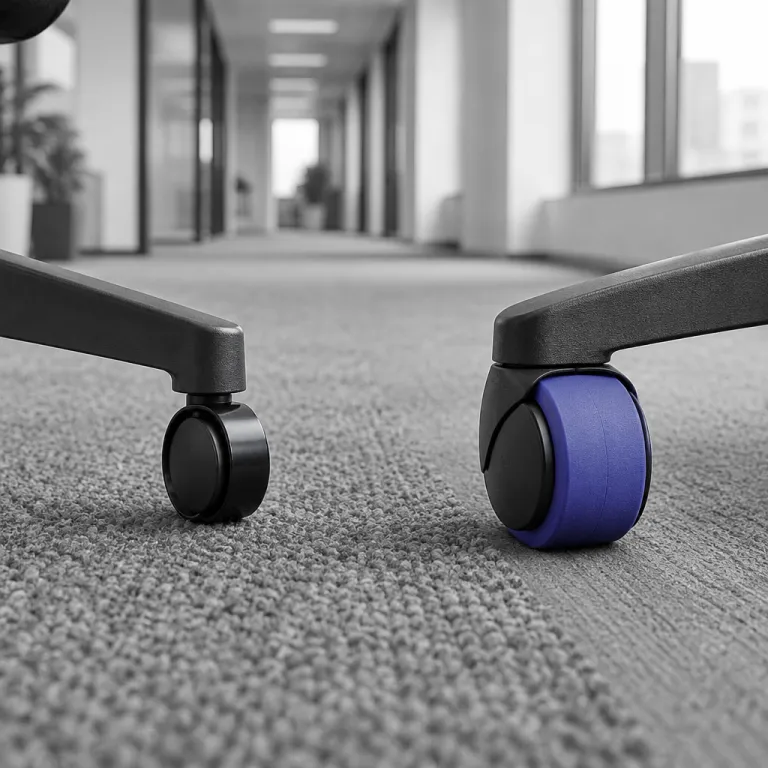
Why caster wheels for carpet matter in Arabian Emirate offices
Office managers in UAE companies quickly learn that the wrong caster wheels for carpet silently damage budgets and morale. When every workstation moves across floor carpet in open plan spaces, poor caster design increases noise, raises maintenance costs, and shortens the life of both the product and the carpet. Choosing the right caster for each chair and storage unit becomes a strategic facilities decision rather than a minor purchasing detail.
Local workplaces often use thick modular carpet tiles over raised access floor systems, which react very differently to hard plastic casters than to soft polyurethane casters. On such a floor carpet, a standard hard black caster can dig into the pile, creating tracks, making movement less easy, and forcing staff to use more effort when shifting chairs. Over time, this friction accelerates wear on both the caster wheels and the carpet, leading to more frequent replacement cycles and unplanned service calls.
Indoor climate also plays a role because UAE office towers rely heavily on air conditioning, which keeps humidity low and can dry out low quality caster products. A high quality polyurethane caster wheel maintains flexibility under these conditions, protecting the floor and keeping movement smooth even when the load per inch of wheel is high. For an office manager responsible for hundreds of chairs, the right mix of caster wheels for carpet directly influences staff comfort, cleaning efficiency, and long term asset value.
Key technical features to evaluate before ordering caster wheels
Before approving any product list, office managers should define clear technical features for caster wheels for carpet in their purchasing specifications. Start with wheel diameter in millimetres or inch, because larger diameters roll more easily over soft carpet and reduce the force needed to move a loaded chair. In many UAE offices, a wheel between 60 and 75 millimetres, roughly 2.5 to 3 inch, offers a good balance between stability, manoeuvrability, and compatibility with standard chair bases.
Material selection is equally critical, and polyurethane treads on the caster wheels usually outperform hard nylon on floor carpet. A soft polyurethane surface spreads the load over more carpet fibres per square inch, which reduces indentation, protects the floor, and cuts noise during movement in quiet meeting rooms. When you compare products, always learn whether the polyurethane is cast or injected, because higher grade cast compounds typically last longer under the rolling loads common in busy UAE call centres and executive suites.
Do not overlook stem type and mounting design, since a mismatch between the original chair socket and the new caster stem can create wobble or even safety risks. For office chairs, the most common standard is a grip ring stem, but some imported products use threaded stems that require different replacement parts. A detailed technical account of chair base dimensions, stem diameters in inch or millimetres, and weight ratings per caster will help your procurement team align new caster wheels for carpet with other ergonomic upgrades such as the right office chair replacement cylinder for Arabian Emirate workplaces.
| Feature | Typical option | Best use on carpet |
|---|---|---|
| Wheel diameter | 50 mm / 2 inch | Light chairs on low pile carpet |
| Wheel diameter | 60–75 mm / 2.5–3 inch | Most task chairs on carpet tiles |
| Tread material | Hard nylon | Short term use, low comfort |
| Tread material | Soft polyurethane | Daily use on office carpet |
Balancing ergonomics, safety, and cleaning services on carpeted floors
Ergonomics in Arabian Emirate offices often focuses on chairs and desks, yet caster wheels for carpet quietly influence posture and fatigue throughout the working day. When a chair glides smoothly across floor carpet, staff can reposition themselves with minimal effort, which reduces twisting of the spine and awkward pushing movements. Poorly chosen caster products force employees to drag chairs, increasing strain on shoulders and lower backs, especially in large meeting rooms where chairs are moved repeatedly.
Safety is another dimension, because the wrong caster design can either roll too freely or not freely enough on carpet. On sloped access ramps or near glass partitions, a chair with very low rolling resistance may move unexpectedly, while a chair that sinks into the carpet may encourage staff to lean heavily and risk tipping. Selecting caster wheels with appropriate resistance for the specific floor carpet type, pile height, and underlay density helps maintain predictable movement and reduces incident reports.
Cleaning services teams also benefit when caster wheels for carpet are correctly matched to the floor system. Smooth rolling polyurethane casters allow cleaning staff to shift furniture quickly during vacuuming, which shortens cleaning duration and improves access to dust trapped near chair bases. For managers exploring broader facility improvements such as smarter waste handling, the same mindset of matching hardware to services applies when evaluating how smart liner choices transform office waste management in UAE companies.
Procurement strategies for caster wheels in Arabian Emirate companies
Strategic procurement of caster wheels for carpet starts with mapping every relevant product category in your office portfolio. Chairs, mobile pedestals, filing cabinets, and modular meeting tables often use different caster designs, yet they all interact with the same floor carpet and cleaning routines. Creating a centralised list of original caster specifications, including wheel diameter in inch, tread material, colour such as black or grey, and mounting type, gives your team a baseline for future replacement decisions.
UAE companies frequently work with regional distributors who bundle caster products with broader office furniture services. When negotiating contracts, request clear documentation of technical features, test standards such as BIFMA X5.1 or ISO 19650 rolling and durability methods, and expected delivery times for both initial orders and ongoing replacement batches. This level of detail helps you compare offers not only on price per caster but also on lifecycle cost, warranty coverage, and the supplier’s ability to help during urgent maintenance situations.
Digital tools can simplify this process, especially when you maintain an internal account of all assets linked to their caster configurations. A simple database or CAFM system can track which zones use which floor carpet type, which caster wheels for carpet are installed, and when each batch was received. Once this structure is in place, you can align caster upgrades with other ergonomic initiatives such as investing in a Clifford red ergonomic desk that reshapes quality of life at work in Arabian Emirate offices.
Managing replacement cycles, warranties, and vendor performance
Replacement planning for caster wheels for carpet should be proactive rather than reactive, especially in high traffic UAE offices. Instead of waiting for a caster to fail and damage the floor carpet, schedule inspections every six to twelve months, focusing on cracks in polyurethane treads, bent stems, and uneven rolling. By tracking the average service life in months or years per caster model, you can learn which products truly meet your performance expectations.
Warranties are often underused tools that can help control total cost of ownership for caster products. When you sign contracts, insist on written terms that specify coverage for tread separation, premature flattening on carpet, and stem breakage under normal office loads measured per inch of wheel width. Keep these documents linked to your asset account records so that facility teams can quickly validate claims and request replacement casters without administrative delays.
Vendor performance should be evaluated on more than just unit price, because reliable delivery schedules and responsive technical support are crucial in UAE business environments. Track metrics such as average delivery time for urgent caster orders, rate of defective products per shipment, and the vendor’s willingness to help with on site assessments of floor and carpet conditions. Over several cycles, this data driven approach will highlight which partners consistently supply high quality caster wheels for carpet and which ones compromise long term office efficiency.
Practical selection checklist for office managers
When you next approve a purchase of caster wheels for carpet, use a structured checklist to reduce risk and standardise decisions. Start by confirming compatibility with the existing chair or furniture design, including stem type, mounting depth, and wheel diameter in inch or millimetres. Then verify that the tread material, ideally high grade polyurethane, is explicitly rated for use on carpet and floor carpet systems similar to those in your UAE offices.
Next, evaluate functional features such as load rating per caster, braking options, and colour, because black casters may hide dust while lighter colours can highlight cleanliness standards. Ask suppliers to provide test reports that reference recognised international standard methods for rolling resistance, durability, and impact performance on carpeted floors. This documentation will help you learn whether the product has been validated under conditions that resemble your own office environment rather than only on hard floor surfaces.
Finally, integrate operational factors into your decision, including expected delivery lead times, availability of identical replacement products for at least several years, and after sales services such as on site installation support. Maintain a central list in your facilities account that records which caster models are installed in each department, along with notes on staff feedback about ease of movement and noise levels on the floor carpet. Over time, this disciplined approach to specifying caster wheels for carpet will support healthier staff, quieter offices, and better protection of your investment in high quality Arabian Emirate workspaces.
Key statistics on caster wheels and carpeted offices
- Industry guidance from carpet manufacturers indicates that using soft tread casters on carpet can significantly extend carpet life compared with hard plastic wheels, which directly reduces replacement frequency and capital expenditure for office managers.
- Testing by office furniture laboratories, including BIFMA-referenced rolling resistance trials, shows that larger diameter casters, typically 60 to 75 millimetres, tend to reduce rolling resistance on carpet, which translates into lower physical effort for staff when repositioning chairs.
- Facilities benchmarking data from professional associations suggests that flooring often accounts for a notable share of total facility maintenance costs in corporate offices, so protecting floor carpet with appropriate caster wheels has a measurable impact on long term operating budgets.
- Noise measurements in open plan offices published by ergonomics researchers report that soft polyurethane casters can cut rolling noise on carpeted floors compared with hard nylon wheels, improving acoustic comfort in shared workspaces.
- Occupational health surveys in office environments have linked frequent chair repositioning on high resistance casters to increased reports of shoulder and lower back discomfort, underscoring the ergonomic value of correctly specified caster wheels for carpet.
FAQ about caster wheels for carpet in Arabian Emirate offices
Which caster material works best on office carpet
Soft tread polyurethane casters generally perform best on office carpet because they distribute weight more evenly across the fibres and reduce indentation. This protects the floor carpet while also lowering rolling resistance, which makes chairs easier to move. In UAE offices with thick carpet tiles, polyurethane usually outlasts hard plastic alternatives.
What caster wheel size should I choose for task chairs
For most task chairs on carpet, a wheel diameter between 60 and 75 millimetres, roughly 2.5 to 3 inch, offers a good balance of stability and manoeuvrability. Smaller wheels tend to sink deeper into the carpet pile and increase effort when moving. Larger casters roll more smoothly but may require checking compatibility with the original chair design.
How often should caster wheels be replaced in busy offices
In high traffic UAE offices, a practical guideline is to inspect caster wheels every six to twelve months and plan replacement every three to five years, depending on wear. Signs that replacement is due include cracked treads, uneven rolling, and visible damage to the floor carpet beneath chairs. Keeping a maintenance log for each product type helps refine these intervals based on real performance.
Can I mix different caster types on the same chair
Mixing different caster types on a single chair is not recommended because it can create uneven rolling behaviour and instability. If one caster has a different diameter, tread material, or design, the chair may tilt slightly or track unpredictably across the carpet. For safety and comfort, always replace casters as a complete matching set.
Do I need special casters for carpet over raised access floors
Carpet installed over raised access floors often has more give, so casters with larger diameters and soft polyurethane treads are usually preferable. These caster wheels spread the load over a larger area and reduce point pressure on both the carpet and the access panels. Office managers should confirm load ratings per caster and ensure compatibility with the specific floor system used in their UAE buildings.